


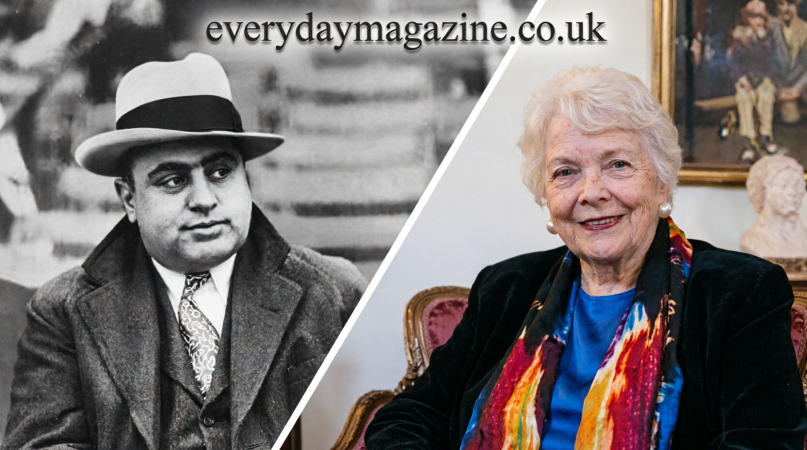
Who is veronica capone?
Veronica Capone is a lesser-known name associated with the wider Capone family lineage, and public information about her life remains extremely limited. Unlike historical figures who appear in verified archives or documented biographies, Veronica Capone is primarily referenced in relation to the Capone surname rather than through independent public records or confirmed achievements. Based on available information, she is understood as part of the extended family background linked to the Capone lineage, a name that continues to attract global curiosity due to its strong historical association. Most online references mention her in genealogical or discussion-based contexts, where interest in descendants of famous families remains high. However, there is no widely verified record of her public career, media presence, or documented historical role. Her relevance in public searches is largely driven by the continued fascination with the Capone family name rather than specific personal visibility. This makes her an example of how family legacy alone can sustain public attention across generations.
Quick Bio
| Category | Details |
|---|---|
| Full Name | Veronica Capone |
| Known For | Connection to the Capone family name |
| Family Link | Associated with the extended Capone family lineage |
| Relation to Al Capone | Indirect/extended family association (not clearly documented) |
| Public Information | Very limited verified public records |
| Profession | Not publicly confirmed |
| Media Presence | None or extremely minimal |
| Biography Status | Private individual with little documented history |
| Public Interest Reason | Searched mainly due to the Capone family legacy |
| Historical Relevance | Connected to the broader cultural interest in the Capone surname |
Al Capone and the Origins of a Criminal Empire
The historical foundation of this story begins with Al Capone, one of the most well-known figures in American crime history. His rise during the early 20th century transformed him into a central figure of organized crime in the United States, particularly during the Prohibition era. Capone’s influence extended far beyond street-level gangs, as he built a structured criminal network that controlled illegal alcohol distribution, gambling operations, and various underground markets. His name became widely recognized across Chicago, Illinois, and eventually throughout the entire country. Public perception of Capone was complex—he was viewed both as a dangerous criminal and, in some circles, a powerful businessman operating outside the law. His story remains deeply tied to discussions about law enforcement, political corruption, and the unintended consequences of national alcohol prohibition. The scale of his influence set the stage for how organized crime would evolve in America for decades.
Prohibition in the United States and Its Unintended Consequences
The period known as Prohibition in the United States played a critical role in shaping the rise of organized crime networks. When the U.S. government banned the production and sale of alcohol, it aimed to reduce social issues related to drinking. However, instead of eliminating alcohol consumption, the law created a massive underground market. This illegal economy quickly became controlled by organized groups who saw a powerful opportunity for profit. Speakeasies, smuggling routes, and bootlegging operations expanded across major cities, especially in urban centers like Chicago. Law enforcement agencies struggled to manage the growing black market, and corruption became increasingly common. The demand for alcohol remained strong, which allowed criminal organizations to gain financial power and social influence. This environment provided the ideal conditions for figures like Al Capone to build large-scale criminal enterprises that operated with near-business-level organization and structure.
Chicago, Illinois and the Rise of Urban Organized Crime
During the Prohibition era, Chicago, Illinois became one of the most important centers of organized crime activity in the country. The city’s rapid industrial growth, combined with its large immigrant population and political instability, created conditions where illegal operations could thrive. Different gangs competed for control over alcohol distribution routes, gambling locations, and territorial influence. Violence and corruption became deeply embedded in the city’s underground economy. Within this environment, Al Capone emerged as a dominant figure, building influence through both strategic alliances and aggressive enforcement. Chicago’s reputation during this period became closely tied to organized crime, making it a symbolic location in American criminal history. The city was not only a battleground for gangs but also a place where the relationship between crime, politics, and society became highly visible. This complex environment helped shape the structure and expansion of criminal organizations during the early 20th century.
The Chicago Outfit and Organized Structure of Power
The formation of the Chicago Outfit marked a significant development in the evolution of American organized crime. Under the leadership of Al Capone, the organization expanded its operations into a highly structured network that functioned similarly to a corporate system. It included various divisions responsible for illegal alcohol distribution, gambling operations, enforcement activities, and financial management. Capone’s leadership style emphasized both control and loyalty, combining strategic decision-making with strict enforcement measures. The Chicago Outfit became one of the most influential criminal organizations of its time, extending its reach beyond Chicago into surrounding regions. Its operations demonstrated how organized crime had evolved from small street gangs into coordinated networks with long-term planning and territorial control. The organization’s structure also influenced how future criminal groups operated, setting a precedent for organized crime systems in the United States.
Organized Crime in the United States: A Broader System
The rise of figures like Al Capone reflects the broader development of Organized crime in the United States. During the early 20th century, organized crime evolved into a complex system involving multiple groups, territories, and illegal markets. These organizations operated across state lines and developed long-term strategies to maintain control over illegal industries. The American Mafia, represented by American Mafia, played a major role in shaping this structure. It introduced hierarchical systems, internal codes, and disciplined organizational methods. Law enforcement agencies gradually adapted to these developments by improving coordination and investigative techniques. However, during the peak of the Prohibition era, criminal networks often maintained an advantage due to corruption and limited federal coordination. This period marked a turning point in how organized crime was understood and addressed in the United States, influencing future criminal justice policies and enforcement strategies.
Saint Valentine’s Day Massacre and National Attention
One of the most infamous events linked to this era is the Saint Valentine’s Day Massacre. This violent incident occurred in Chicago and involved the killing of members of a rival gang. Although Al Capone was never formally charged in connection with the event, it became strongly associated with his ongoing conflict with competing criminal groups. The massacre attracted nationwide attention and significantly increased public awareness of organized crime in the United States. Newspapers across the country reported extensively on the event, highlighting the scale and brutality of gang-related violence during the Prohibition era. The incident also placed greater pressure on law enforcement agencies to intensify their efforts against organized crime leaders. It remains one of the most frequently discussed events in American criminal history and symbolizes the extreme level of violence associated with gang conflicts during that period.
Scarface and Cultural Representation of Al Capone
The influence of Al Capone extended into popular culture through films such as Scarface (Al Capone). While not a direct biography, the film drew inspiration from the rise of organized crime during the Prohibition era. It contributed to shaping the public image of gangsters as both powerful and controversial figures. Over time, Hollywood developed a strong interest in crime-related storytelling, often portraying characters influenced by real-life figures like Capone. These cultural representations helped cement his legacy in global entertainment history. The portrayal of organized crime in cinema also influenced how audiences understood the social and psychological dynamics of criminal organizations. As a result, Capone’s influence extended beyond history into long-lasting cultural narratives that continue to appear in modern media, literature, and film adaptations.
Alcatraz Federal Penitentiary and the Fall of Power
The downfall of Al Capone marked a significant shift in his life and legacy. After being convicted of tax evasion, he was imprisoned at Alcatraz Federal Penitentiary, one of the most secure facilities in the United States. This prison was known for housing some of the country’s most dangerous criminals. Capone’s imprisonment symbolized the government’s increasing ability to target organized crime through financial and legal investigations rather than direct criminal charges. During his time at Alcatraz, his health began to decline due to medical complications, and he gradually withdrew from any remaining influence he once held. His imprisonment represented the end of his criminal empire and demonstrated that even the most powerful figures in organized crime could eventually be held accountable.
The Capone Family Legacy and Private Life
The Capone family represents a quieter and more private side of this historical narrative. While Al Capone’s life was defined by public attention and criminal activity, his family members chose to live largely out of the spotlight. Among them is Albert Francis Capone, who followed a very different life path from his father. He focused on building a stable and private existence away from the criminal associations of the Capone name. His life reflects how descendants of well-known historical figures often attempt to separate personal identity from inherited public perception. This contrast between public legacy and private life highlights the complexity of living with a globally recognized surname that carries both historical weight and cultural expectations.
Albert Francis Capone: Life Beyond the Shadow
Albert Francis Capone’s life was shaped by the challenge of growing up under the influence of his father’s reputation. Despite this, he pursued a path focused on stability and privacy. Historical accounts suggest that he engaged in legitimate professional work and maintained a low public profile throughout his adult life. He avoided media attention and rarely appeared in public discussions related to his father’s criminal history. His choices reflect a deliberate effort to create distance from organized crime associations and build a personal identity based on normalcy. This approach is often seen among children of historically controversial figures who seek independence from inherited reputations. His life story demonstrates how personal decisions can redefine identity even when family history remains widely recognized.
American Mafia Influence and Long-Term Impact
The influence of the American Mafia extended well beyond the era of Al Capone. Organized crime networks continued to evolve, becoming more secretive and structured over time. Law enforcement agencies developed more advanced investigative techniques in response to these growing challenges. The Capone era played an important role in shaping modern approaches to criminal justice and federal law enforcement coordination. Over time, organized crime became less visible but remained an ongoing concern in various forms. The legacy of this period continues to influence how crime networks are studied and understood in both academic and legal contexts.
Cultural and Historical Legacy
The story of Al Capone remains one of the most significant examples of organized crime in American history. His rise during Prohibition, leadership of the Chicago Outfit, and eventual imprisonment at Alcatraz form a narrative that continues to attract global interest. At the same time, the lives of his descendants, including Albert Francis Capone, highlight the long-term impact of historical reputation on family identity. This combination of public notoriety and private resilience creates a complex legacy that extends beyond crime into themes of identity, consequence, and historical transformation.
Conclusion
The legacy of Al Capone continues to fascinate historians, filmmakers, and readers around the world. His rise during Prohibition in the United States, control of the Chicago Outfit, and imprisonment at Alcatraz Federal Penitentiary all contribute to a story that defines an era in American history.
Yet, beyond the headlines and historical records, the Capone family legacy also includes quieter stories of individuals like Albert Francis Capone, who chose a life away from crime and public attention. This contrast between notoriety and normalcy makes the Capone story not just about crime, but about identity, consequence, and the long shadow of history.
Even today, the world continues to study this era—not only to understand organized crime, but also to understand how history shapes families long after the events themselves have ended.
FAQs
Who was Al Capone?
He was a leading figure in organized crime during the Prohibition era in the United States, known for controlling the Chicago Outfit.
What was the Chicago Outfit?
It was a criminal organization led by Al Capone that controlled illegal alcohol, gambling, and other underground activities.
What caused the Saint Valentine’s Day Massacre?
It was part of gang conflicts between rival groups competing for control in Chicago during the 1920s.
Why was Al Capone sent to Alcatraz?
He was convicted of tax evasion and imprisoned at Alcatraz Federal Penitentiary.
Who is Albert Francis Capone?
He was the son of Al Capone and lived a private life away from organized crime.
What was Prohibition in the United States?
It was a national ban on alcohol from 1920 to 1933 that contributed to the rise of organized crime.
Why is Al Capone still famous today?
Because of his influence on organized crime and his lasting cultural and historical impact.
