


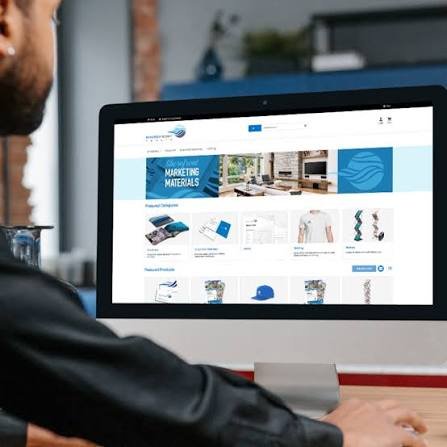
Most print business owners choose web-to-print software the wrong way.
Not because they lack judgment. Because the evaluation process they use was designed for the wrong problem. They compare features on a spreadsheet, watch a demo, and pick the platform with the most impressive interface. Then, six months later, they’re managing workarounds that have become their process, wondering why the ROI hasn’t materialized.
The research bears this out. Nearly half of businesses regret at least one software purchase from the previous 18 months. Of those, 63% describe the financial impact as significant to monumental. In an industry where margins are already tight and technology decisions last three to five years, a bad web-to-print selection isn’t just expensive. It is operationally disruptive.
The problem isn’t the software. It’s the evaluation framework. Most print shops apply a consumer mindset to a production decision. They evaluate from the outside in, starting with the interface they’ll demo and ending with a contract for software that doesn’t match how their production floor actually works.
This framework reverses that. It starts with production fit and works outward to customer experience, not the other way around.
Start With the Evaluation Nobody Does First: Production Fit
Before comparing design editors, pricing pages, or integration lists, every print business owner should answer one question: does this platform actually match how we produce?
This sounds obvious. It isn’t. Most web-to-print software are designed for “average” print businesses. When your workflow is different from the platform’s assumptions, you spend implementation customizing around those assumptions rather than getting online faster. The workarounds become the process. And the process becomes your competitive disadvantage.
Production fit has three specific dimensions worth examining before anything else.
Does it generate genuine print-ready output? There is a significant difference between a platform that generates a “print-ready” PDF and one that generates a genuinely production-ready file with correct bleed, trim marks, color space, and resolution for your specific press configuration. Ask vendors to show you an actual output file, not a screen preview. Run it through your RIP. If it fails your standard preflight, that’s your answer.
How does it handle your product complexity? A commercial print shop selling business cards, brochures, and banners has different configuration requirements than a packaging printer selling custom boxes with dielines, or a wide format shop pricing by square footage. Most platforms handle the easy products well in demos. The revealing test is your most complex product, not your simplest one. Ask the vendor to configure your hardest product live during the evaluation.
How far does the automation actually go? Many platforms automate order intake but require manual handoffs at prepress, job ticketing, or production routing. Automation that stops at the storefront creates a different bottleneck, not a smaller one. Map your full order workflow from customer submission to press-ready output and ask at which step human intervention is still required.
Evaluate the Pricing Engine, Not the Pricing Page
Print pricing is not ecommerce pricing. A t-shirt has three sizes and four colors. A banner has infinite size combinations, multiple substrates, variable finishing options, and quantity breaks that change the per-unit rate. Most web-to-print platforms handle the first. Fewer handle the second well.
The pricing engine is the technical component that calculates what a customer pays based on the configuration they build. It is the most consequential and least-discussed feature in most evaluations. Asking to see the pricing engine in action before signing is non-negotiable.
Specifically, test for:
- Formula-based calculation. Can the platform calculate price from a rule set (base rate multiplied by area, plus additive finishing options, multiplied by a rush surcharge) rather than from a lookup table of pre-entered variants?
- Quantity break support. Does the price per unit update in real time as quantity changes, with the correct break rates applied automatically?
- Custom dimension input. For products sold by size (banners, substrates, packaging), can the customer enter their own dimensions and receive an accurate price instantly?
- Real-time display. Does every configuration change update the displayed price immediately, without requiring a “request quote” step that kills conversion?
A platform that passes all four is built for print. One that fails any of them will require workarounds the moment a customer tries to order something more complex than a standard business card.
Understand the B2B vs. B2C Architecture Before You Need It
Many print businesses start with B2C ordering and add B2B clients over time. The ones that chose a platform without thinking about B2B architecture discover too late that their platform handles corporate accounts poorly.
B2B print ordering has specific requirements that a standard ecommerce checkout flow cannot accommodate:
- Locked templates where corporate clients can personalize within brand guidelines but cannot change colors, fonts, or logo placement
- Role-based access where a franchise location can order only from their approved product catalog, not the full storefront
- Approval workflows where a manager signs off on an order before it routes to production
- Negotiated pricing that differs by client, by volume tier, or by product category
- Invoice-based billing rather than credit card checkout
These are not edge cases. They are standard requirements for any print shop with corporate accounts. If you serve even a handful of enterprise or multi-location clients now, and most $1M+ shops do, verify that the platform handles all five requirements natively before signing.
Look Beyond the Subscription Price to Total Cost of Ownership
Web-to-print software pricing models are not standardized. They vary enough that the cheapest-looking option often costs the most over a three-year period.
The three most common structures are subscription-based (monthly or annual fee, sometimes tiered by volume or storefronts), revenue share (a percentage of each transaction, which starts cheap and becomes expensive at scale), and license plus hosting (upfront cost with ongoing hosting fees).
None of these is universally better. But every evaluation should build a three-year total cost model, not a monthly fee comparison.
Factor in:
- Implementation and configuration time (who does it, at what cost)
- Integration work required to connect to your MIS, accounting software, and ecommerce platform
- Training hours for staff and customers
- Ongoing support quality and response time
- Migration cost if you outgrow the platform or need to switch
The last point matters more than most owners realize. If you build two years of customer templates, order history, and product configurations on a platform, migration is not cheap or fast. Evaluate how portable your data is before you commit, not after.
Test Integration Depth, Not Integration Lists
Every web-to-print platform claims to integrate with Shopify, WooCommerce, and major MIS systems. The integration list is not what matters. Integration depth is.
An integration that syncs order status once per hour creates a different operational experience than one that syncs bidirectionally in real time. An integration that pushes order data to your MIS but not artwork files creates a different workflow than one that passes the complete job ticket. An integration that requires a developer to configure creates different ongoing maintenance than one with a native plugin.
For each integration your business requires, ask vendors to demonstrate the specific data flows rather than confirm the connection exists. “We integrate with X” is the beginning of the conversation, not the answer.
The specific integrations that matter most for $1M+ print businesses:
- Ecommerce platform. Native integrations with Shopify, WooCommerce, or Magento should handle bidirectional order status, product catalog sync, and file transfer, not just order notification.
- MIS/ERP. The connection between your online storefront and your production management system is where most integrations fail. Job tickets should pass automatically. Manual re-entry at this handoff defeats the purpose of automation.
- Payment processing. For B2B clients, does the platform support purchase orders and invoice-based billing, not only credit card checkout?
Avoid the Three Patterns That Send Evaluations Off Course
The research on bad software decisions points to three recurring mistakes.
The urgency trap. A major client requests an online ordering portal. You need an answer fast. You choose the platform that’s available and easy to approve. Questions about production fit get pushed to implementation. By the time you realize the platform doesn’t match how you operate, the contract is signed. Evaluations compressed by external deadlines consistently produce worse decisions. Build at least 60 days into your timeline.
Evaluating the interface first. The design editor is the easiest part of a platform to demo and the hardest to judge from a demo. It looks impressive in a presentation. What you cannot see from a demo is how the pricing engine performs on your complex products, how the MIS integration behaves in production, or how support responds when something breaks at 4 PM on a Thursday. Evaluate the interface last, after you have confirmed production fit, pricing depth, and integration quality.
Choosing features over fit. More features are not better if they are features your business doesn’t need. A platform with 200 capabilities that handles your actual products poorly is worse than a platform with 50 capabilities that handles them well. The question is not “does it have X feature?” but “does it handle the specific way we produce and sell?”
A platform that consistently earns points on these criteria is one that handles both production complexity and customer-facing ordering without requiring separate systems for each. DesignNBuy, for instance, is built around exactly this architecture: a unified platform that combines the design editor, pricing engine, automated preflight, job management, and ecommerce integrations in one system, so the evaluation criteria above can all be tested against a single vendor rather than assembled from multiple tools.
The Evaluation Scorecard
Before shortlisting any platform, score it on these six dimensions:
- Production fit. Does it handle your most complex products, not just your simplest?
- Pricing engine. Formula-based, dynamic, real-time display. Does it pass the live test?
- B2B capability. Template locking, approval workflows, role-based access, invoice billing.
- Total cost of ownership. Three-year model, not monthly fee comparison.
- Integration depth. Demonstrated data flows, not integration lists.
- Migration risk. How portable is your data if you outgrow the platform?
Any platform that cannot demonstrate a clear answer on all six should not make your shortlist, regardless of how impressive the demo looks.
The print businesses that choose well on this decision tend to stay with their platform for years and expand the use cases over time. The ones that choose poorly spend those same years managing workarounds, planning a migration, or absorbing the cost of both.
