


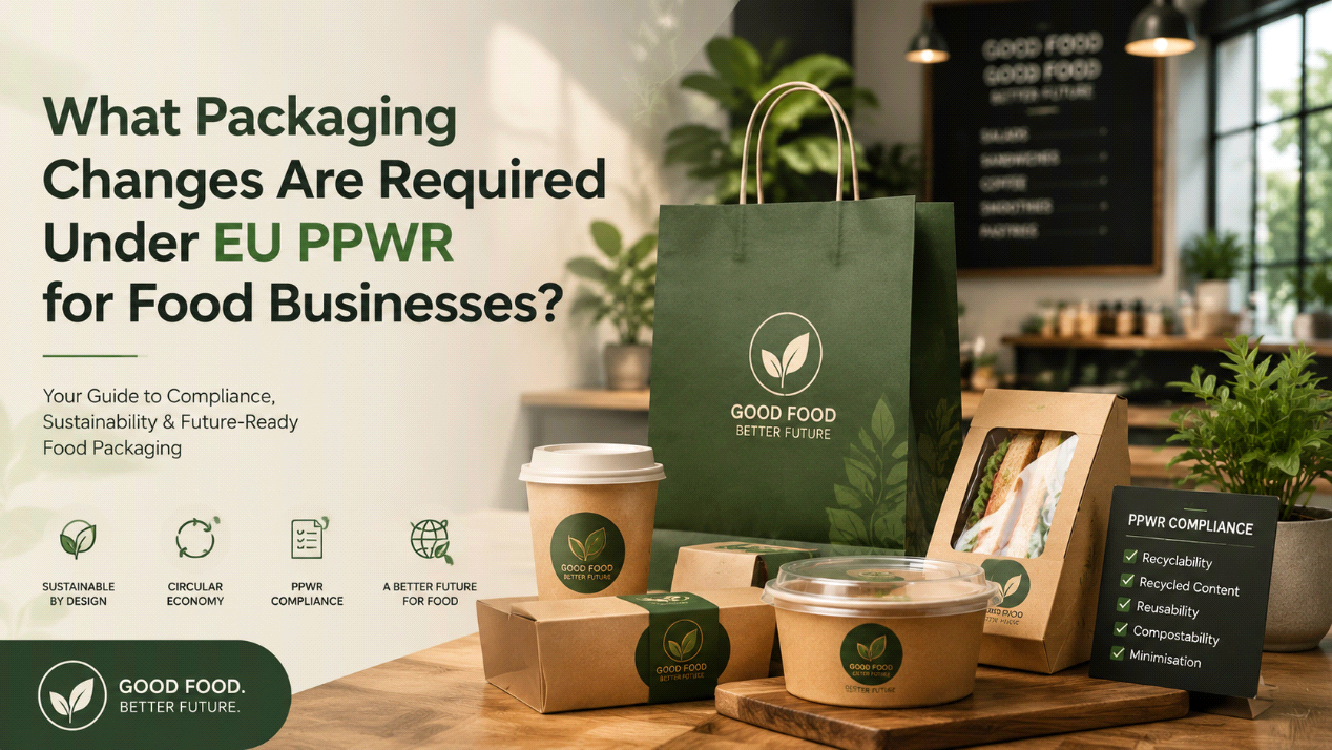
EU PPWR (Packaging and Packaging Waste Regulation) is a new EU regulation that fundamentally changes how packaging must be designed, used, and recycled across Europe. It replaces older fragmented directives with a single legally binding framework that applies directly in all EU member states. This means food businesses must comply consistently across countries without national variation.
For restaurants, cafés, bakeries, and takeaway operators, this regulation directly impacts everyday packaging choices such as cups, food containers, lids, cutlery, and delivery packaging. The core shift is from “packaging that looks sustainable” to packaging that is proven recyclable within real EU recycling systems. Official policy from the European Commission packaging waste framework confirms this system-level transformation.
What is EU PPWR and why does it matter for food businesses?
EU PPWR is a single binding packaging law across all EU countries
EU PPWR is a directly applicable EU regulation that replaces older packaging directives. It does not require national laws to enforce it, meaning all member states follow the same rules. This creates a unified packaging compliance system across Europe.
For food businesses, this means packaging must meet identical standards whether operating in France, Germany, or Italy. There is no local flexibility in recyclability definitions. This increases consistency but also raises compliance pressure for operators.
Food service packaging is one of the most affected categories
Food service packaging is heavily impacted because it generates large volumes of single-use materials. Items such as takeaway cups, meal boxes, and cutlery fall directly under PPWR recyclability and reduction targets. This forces operational changes in procurement and packaging design.
Businesses must now evaluate packaging based on compliance rather than aesthetics or branding. Many operators are already switching suppliers to meet new requirements. A practical breakdown can be found in this EU PPWR compliance guide for packaging requirements, which translates regulation into operational decisions.
When does EU PPWR become mandatory?
2026 marks the beginning of enforceable compliance
EU PPWR starts phased enforcement from 2026, meaning businesses must begin adapting packaging systems immediately. While full penalties may be gradual, compliance expectations begin at this stage. This includes recyclability standards and packaging reporting requirements.
Food businesses should treat 2026 as an active transition deadline. Procurement decisions made now will affect long-term compliance. EU regulatory documents confirm this phased enforcement structure.
Requirements will tighten progressively toward 2030
After 2026, PPWR requirements gradually become stricter toward 2030 and beyond. This includes higher recyclability thresholds and expanded reuse obligations. Packaging that is acceptable today may become non-compliant later.
This phased approach allows industry adaptation but requires early preparation. Supply chains will need continuous upgrades. Legal analysis confirms increasing enforcement pressure across all packaging categories over time.
What packaging changes are required under EU PPWR?
Packaging must be truly recyclable in real EU systems
EU PPWR requires packaging to be recyclable in real-world EU recycling infrastructure, not just theoretically recyclable. This means materials must be processed effectively at industrial scale. Complex composite packaging is increasingly discouraged.
For food businesses, this changes how packaging is selected and evaluated. Labels and marketing claims are no longer sufficient. Real recyclability performance becomes the key compliance factor.
Packaging design must shift toward material simplification
PPWR requires packaging to move toward mono-material or easily separable structures. Multi-layer plastics and laminated packaging reduce recycling efficiency and face higher compliance risk. This affects most food service packaging categories.
Restaurants and cafés must simplify packaging portfolios and standardize materials across suppliers. Industry guidance in this PPWR packaging compliance explanation highlights material simplification as a core requirement.
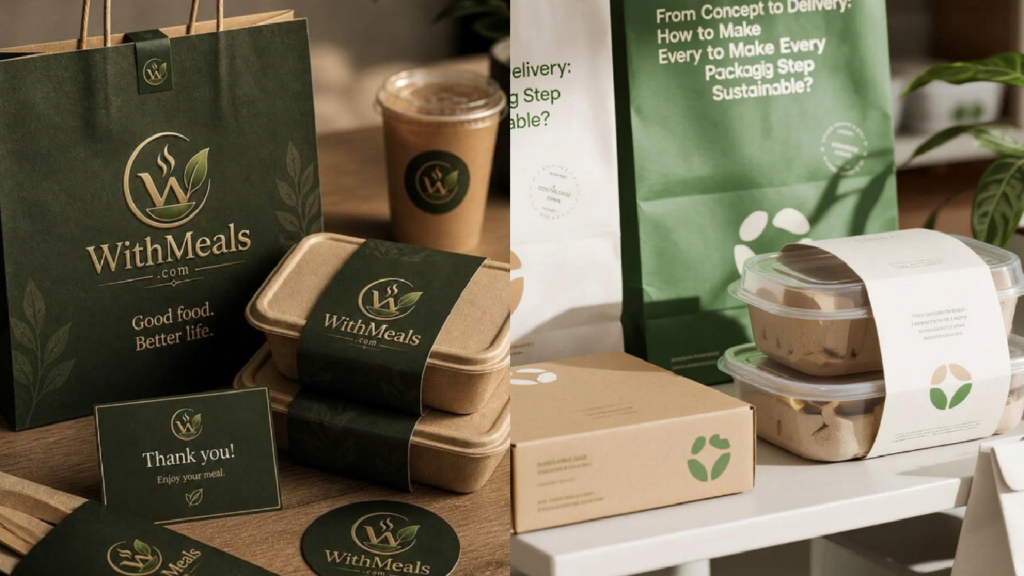
What changes are required for coffee cups and takeaway containers?
Coffee cups must be redesigned for recyclability
Coffee cups must avoid multi-layer structures that are difficult to recycle under PPWR standards. Traditional paper-plastic cups often fail recyclability criteria due to coating separation issues. This creates compliance challenges for cafés and roasters.
Businesses should switch to mono-material or certified recyclable cup systems. Even lids and sleeves must be evaluated for material compatibility. Supplier transparency becomes essential for compliance validation.
Takeaway containers must align with recycling systems
Takeaway containers must shift toward recyclable mono-material structures such as PP or PET. Laminated and mixed-material containers are increasingly non-compliant under PPWR. This affects meal boxes, salad containers, and bakery trays.
Operators should prioritize packaging that fits EU sorting systems. End-of-life processing must be considered during procurement. This ensures long-term compliance stability in food delivery operations.
Will reusable packaging become mandatory?
Reuse systems are strongly encouraged
EU PPWR strongly promotes reusable packaging systems across food service sectors. This includes returnable containers and refill systems. However, implementation is gradual rather than immediate. Businesses are encouraged to pilot reuse models in controlled environments. This reduces future compliance pressure. EU policy supports long-term scaling of reuse infrastructure.
Mandatory reuse depends on sector and rollout phase
Reuse requirements will expand gradually depending on sector and timeline. High-volume food service environments are expected to adopt reuse earlier. This includes canteens and large-scale operators.
Smaller cafés and bakeries may have longer transition periods. However, early adoption improves compliance readiness. Businesses should begin testing reuse systems where feasible.
Is plastic packaging banned under EU PPWR?
Plastic is not banned but strictly regulated
EU PPWR does not ban plastic packaging entirely. Instead, it restricts non-recyclable and low-value plastic formats. This includes multi-layer and composite plastics. Recyclable mono-material plastics remain allowed. The regulation focuses on improving circularity rather than eliminating materials. This distinction is critical for food businesses.
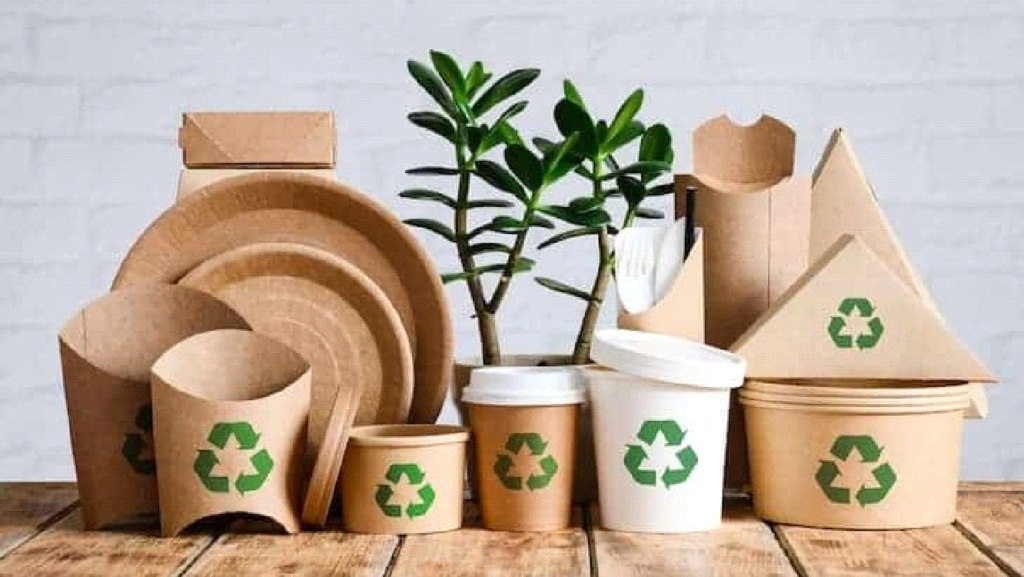
High-risk plastics are composite structures
The highest compliance risk comes from composite and laminated plastics. These materials reduce recycling efficiency and often fail sorting systems. This directly impacts takeaway packaging design. Businesses should avoid complex multi-layer packaging. Supplier transparency is essential for identifying compliant materials. This reduces long-term regulatory risk.
What impact will PPWR have on costs and suppliers?
Packaging costs will increase during transition
EU PPWR will increase short-term costs due to packaging redesign and material upgrades. Supplier changes and compliance documentation also add operational expenses. This is expected across the industry. Food businesses should plan gradual cost adjustments. Early transition reduces long-term disruption. Procurement strategy becomes critical for cost control.
Supply chains will need restructuring
Suppliers will change as compliance requirements tighten. Businesses may need to switch vendors to meet recyclability standards. This affects cups, containers, and delivery packaging sourcing. Industry analysis from Greenberg Traurig compliance insights confirms supply chain restructuring as a major impact area.
FAQ
Is EU PPWR already affecting food businesses in 2026?
Yes, EU PPWR is already affecting food businesses in 2026 due to phased enforcement. It means companies must begin adapting packaging immediately to meet recyclability standards. The reason is that EU regulations apply directly across all member states. Businesses should start transitioning takeaway and delivery packaging now to ensure compliance in both short-term operations and long-term planning.
Do businesses need to change all packaging immediately?
No, businesses do not need to change all packaging immediately. It means existing inventory can still be used during transition phases. The reason is that PPWR is designed for gradual implementation across supply chains. Operators should prioritize high-volume packaging categories first and shift suppliers progressively toward compliant materials.
Are compostable materials compliant under EU PPWR?
No, compostable materials are not automatically compliant under EU PPWR. It means compliance depends on whether materials fit local waste processing systems. The reason is that PPWR prioritizes real recyclability over biodegradability claims. Businesses should verify local acceptance and consider recyclable-certified packaging for operational reliability in both takeaway and dine-in use cases.
Can cafés still use plastic cups?
Yes, cafés can still use plastic cups if they meet recyclability requirements. It means plastic is not banned but must be designed for recycling. The reason is that PPWR focuses on material performance rather than material elimination. Cafés should prioritize mono-material cups and ensure suppliers provide verified recyclability documentation.
What happens if a business does not comply with PPWR?
Yes, non-compliance with EU PPWR can lead to penalties and market restrictions over time. It means packaging that fails recyclability standards may not be allowed in the EU market. The reason is that PPWR is a binding regulation across all member states. Businesses should conduct packaging audits early and align suppliers to avoid disruption in operations and supply chains.
